Leak diagnosis & repair
Tracing an interior leak back to its actual source — a failed flashing detail, a cracked tile, a deteriorated pipe boot — rather than patching the spot where the water happened to show up.
Not every roof problem calls for replacement. Perkins traces leaks, storm damage and failed transitions to the source, then scopes the smallest durable repair—or explains when the whole assembly has reached its limit.
Residential & commercial repairs · complete briefing
Every roof type on the portfolio — tile, membrane, coating, flat — has its own common failure points and its own repair approach.
Tracing an interior leak back to its actual source — a failed flashing detail, a cracked tile, a deteriorated pipe boot — rather than patching the spot where the water happened to show up.
Post-storm assessment and repair for lifted or missing tiles and shingles, damaged flashing, and membrane punctures after South Florida’s wind events.
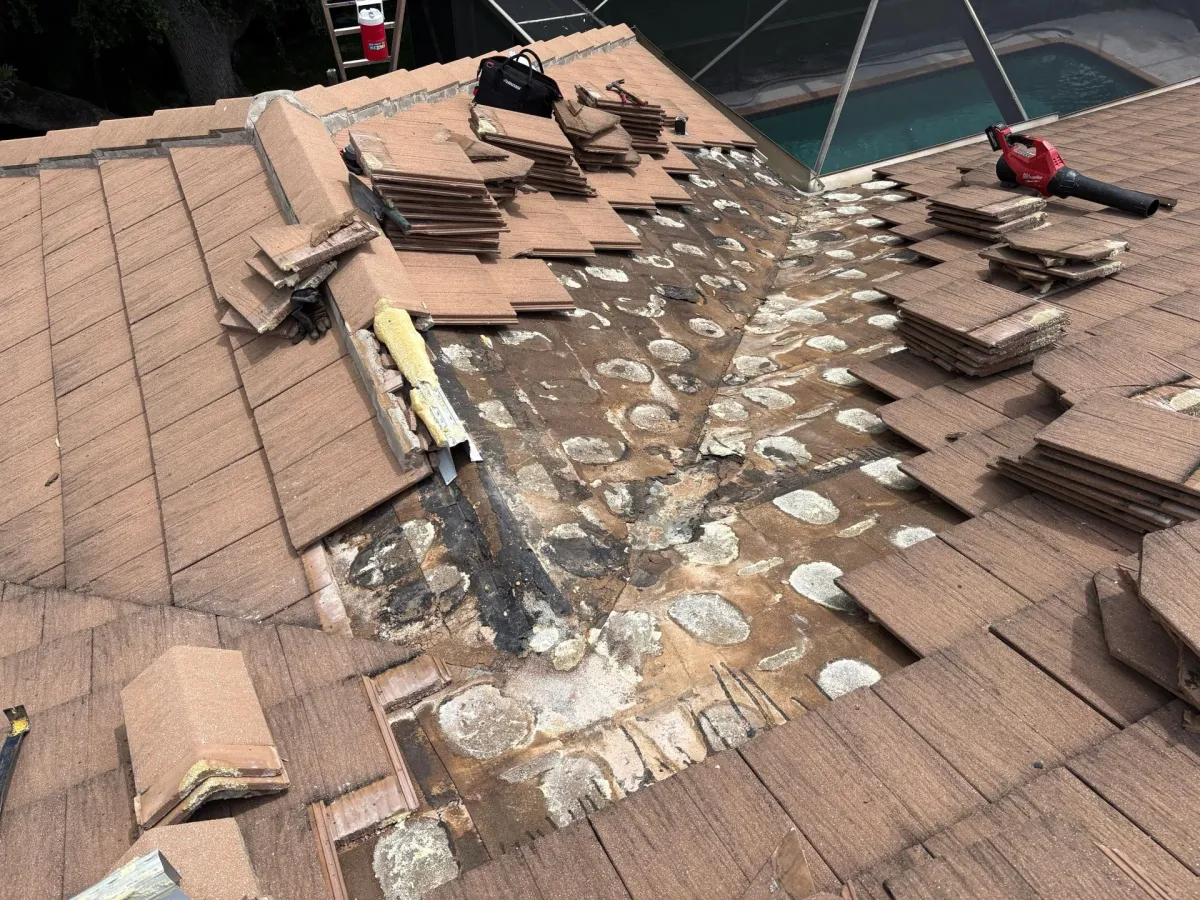
Re-sealing and re-flashing the transitions — valleys, walls, chimneys, skylight curbs — where a roof fails first, long before the field material does.
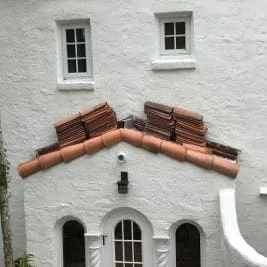
Replacing individual cracked or displaced tiles and shingles, matched to the existing roof, without opening up a full re-roof scope for a localized problem.
Targeted membrane repair on flat and low-slope roofs — sealing blisters, seam separations, and ponding-area failures on TPO, modified bitumen, and coated systems.
Correcting drainage that’s no longer moving water off the roof the way it was designed to — clogged or damaged gutters, downspouts, drains, and scuppers.
A localized problem doesn't always mean the whole roof needs replacing.
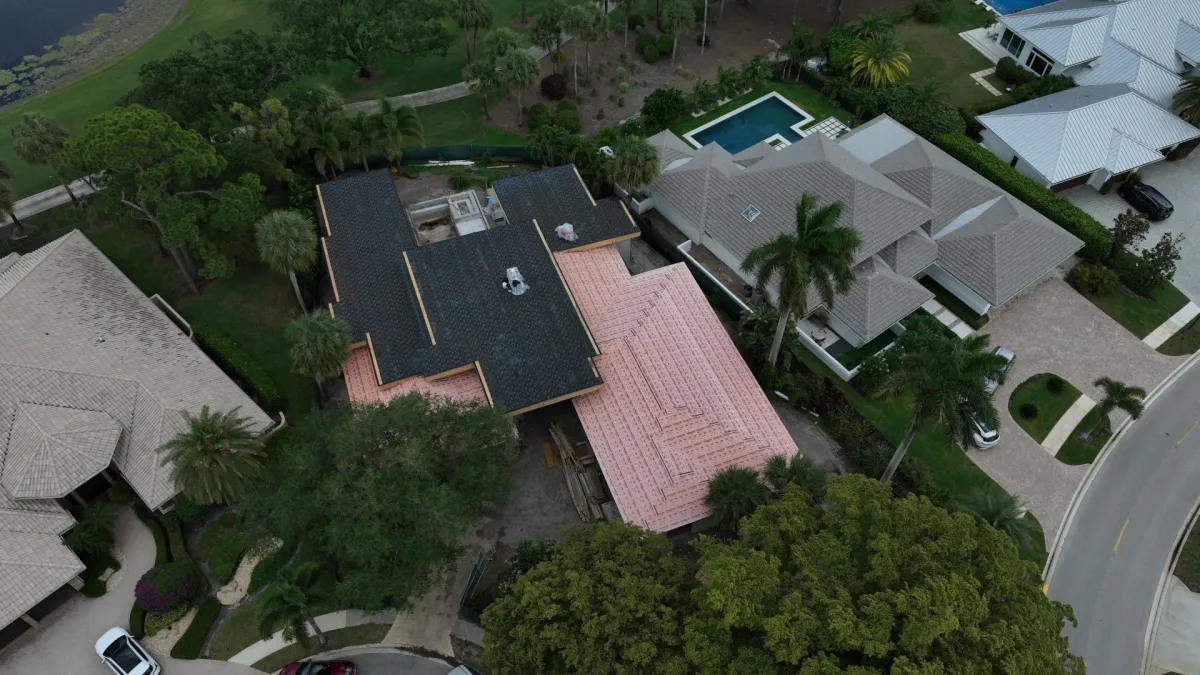
A repair makes sense when the failure is contained — a section of flashing, a run of tiles, a membrane seam — and the roof around it is otherwise sound. A full re-roof or restoration becomes the right call when the underlying system is at the end of its service life, when repeated repairs are chasing the same underlying failure, or when a structure needs a scope of work large enough to see on the project portfolio instead. Either way, that call starts with an honest inspection, not an assumption.
Free estimate
Describe what's happening and both offices can get an estimate scheduled.