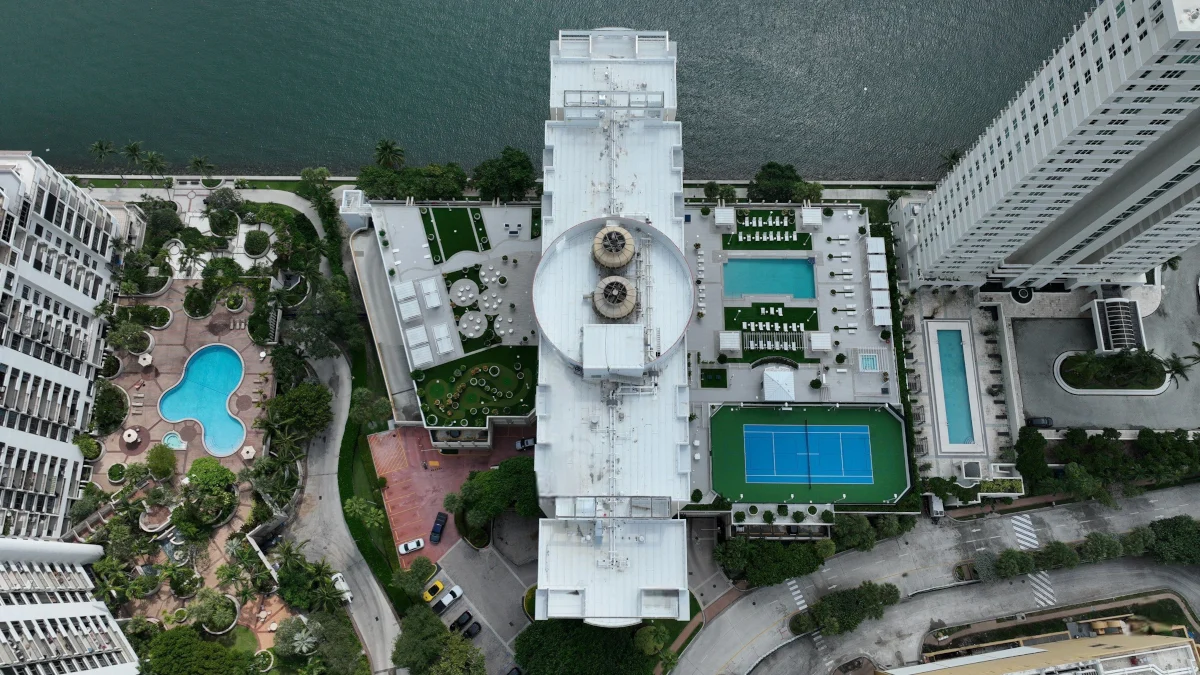
A commercial roof in Miami-Dade must do more than keep water out. It must be designed, specified, permitted and installed for one of the most demanding wind and weather environments in the United States. For property owners and managers, that makes roofing decisions more technical than simply comparing materials and prices.
Miami-Dade County is part of Florida’s High-Velocity Hurricane Zone, commonly referred to as the HVHZ. Roofing products and assemblies used in this zone must meet additional requirements intended to improve performance under extreme wind pressure, wind-driven rain and hurricane conditions. The correct roof system also has to suit the building, deck, drainage, exposure and approved installation method.
Perkins Roofing Corp. has served South Florida since 1980 and works with commercial buildings, condominium communities, multifamily properties and other large structures across Miami-Dade. This guide explains the practical questions property owners should ask before approving a commercial roofing project.
What Is the High-Velocity Hurricane Zone?
The HVHZ is the part of Florida in which the building code applies enhanced requirements for the building envelope, including roofing. Miami-Dade and Broward counties fall within this zone. The requirements affect how a roofing system is selected, attached, tested, documented and inspected.
The current Florida Building Code is the 8th Edition (2023), which became effective on December 31, 2023. Miami-Dade County also operates a Product Control process that reviews and issues approvals for building-envelope products and systems, including roofing. Property owners do not need to interpret every technical provision themselves, but they should choose a contractor that understands how the code, product approval and project-specific design work together.
Watch: What’s the Difference Between HVHZ and the Florida Building Code?
Perkins Roofing explains how HVHZ requirements differ from the broader Florida Building Code and what these enhanced requirements mean for roofing projects in South Florida.
A New Florida Building Code Is Expected for 2027 Projects
The Florida Building Commission is developing the 9th Edition (2026), which is expected to take effect on December 31, 2026.
Property owners planning commercial roofing work for 2027 should confirm which edition will apply when the permit application is submitted. The code in effect on the permit application date will generally govern the project for the life of that permit.
The final 9th Edition requirements and applicable product approvals should be checked before design, budgeting or product selection is completed.
Sources: floridabuilding.org and Florida Roofing and Sheet Metal Contractors Association, INC. (FRSA)
Why HVHZ Compliance Is More Than Choosing a ‘Hurricane-Rated’ Product
A product label alone does not make a roof compliant. A commercial roofing assembly includes the roof deck, insulation or cover board where applicable, membrane or surface system, fasteners or adhesives, perimeter and corner details, flashings, penetrations, edge metal and drainage components.
The same product may be approved for one deck type, attachment method or pressure range but not another. Commercial buildings may also have different design pressures at the field, perimeter and corners of the roof. Taller buildings, coastal exposure and building geometry can increase the demands placed on the system.
What a Miami-Dade Notice of Acceptance Means
A Miami-Dade Notice of Acceptance, or NOA, is a product approval issued through the County’s Product Control Section. It provides technical information about the approved product or system, its permitted uses, limitations, test information and installation requirements.
An NOA is important, but it should not be treated as a general certificate that allows a product to be installed in any way. The contractor and project team must confirm that the approval applies to the building’s deck, roof configuration, attachment method and required design pressure. The approval should also be checked to ensure that it has not expired or been superseded.
Property owners can ask the roofing contractor to identify the proposed system and the applicable product approval before work begins. This creates a clearer record for the owner, property manager, building department and future maintenance team.
Commercial Roofing Systems Commonly Considered in Miami-Dade
The correct system depends on the building rather than a single preferred material. Perkins Roofing commonly evaluates commercial and multifamily properties for modified bitumen, fluid-applied restoration systems, metal roofing and other approved assemblies suited to the existing roof and the property’s long-term needs.
TPO can be considered for certain projects, but it is not the system Perkins Roofing installs most frequently. EPDM is not offered by Perkins Roofing and should not be presented as part of its normal flat-roof service.
What Property Owners Should Verify Before Approving a Proposal
- Contractor licensing. Confirm that the roofing contractor holds the appropriate current Florida licence for the work.
- Building-specific scope. The proposal should identify the existing roof, deck conditions, drainage concerns and areas requiring repair or replacement.
- Approved system. Ask which product approval or NOA applies to the proposed roof assembly.
- Permitting responsibility. Confirm who will submit the permit, respond to plan-review questions and coordinate required inspections.
- Wind-uplift design. Large, coastal or unusually shaped buildings may require project-specific engineering.
- Drainage. Ponding water and blocked drainage can shorten roof life and may indicate that repairs beyond the surface membrane are required.
- Warranty terms. Separate the manufacturer’s material or system warranty from the contractor’s workmanship warranty.
- Documentation. Keep proposals, approvals, permits, inspection records, photographs and warranties in the property file.
HVHZ Compliance and Commercial Property Insurance
Code compliance and insurance requirements are related, but they are not the same. A permitted, code-compliant roof may still be reviewed by an insurer based on age, condition, maintenance history, roof type and the carrier’s underwriting guidelines.
A roofing contractor can document visible conditions, completed work and the products used. Formal wind mitigation or four-point insurance inspections, however, must be completed and signed by an appropriately qualified inspector. Perkins Roofing may arrange or outsource these inspections when required rather than representing that its roofing team performs the regulated insurance inspection directly.
Why Scheduled Inspections Still Matter After Installation
HVHZ compliance at installation does not remove the need for maintenance. Commercial roofs contain seams, flashings, drains, penetrations, sealants and rooftop equipment interfaces that change over time. Service traffic, debris, standing water, UV exposure and storm activity can create weaknesses even when the original installation was compliant.
Property managers should arrange scheduled roof-condition inspections, especially before hurricane season, after significant storms and before warranty deadlines. Small defects are usually easier to manage before water reaches insulation, interior finishes, electrical equipment or occupied areas.
Perkins Roofing’s Miami-Dade Commercial Experience
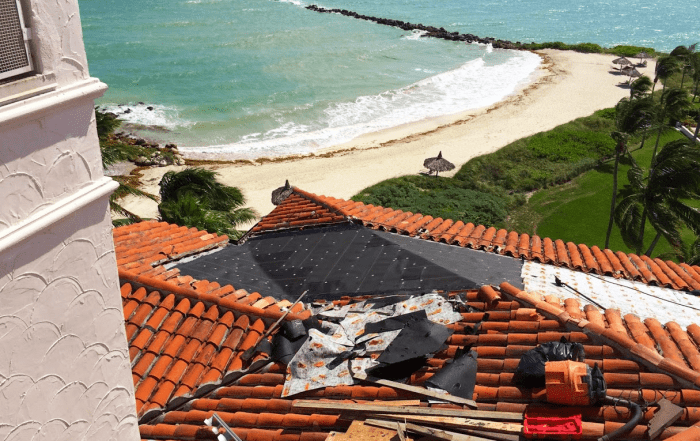
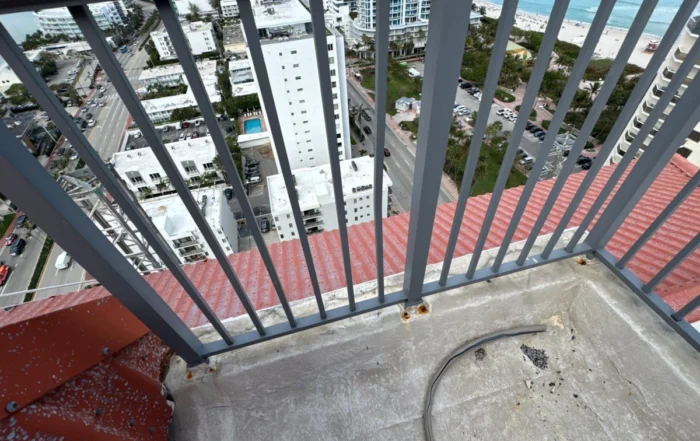
Perkins Roofing has operated in South Florida since 1980 and has completed roofing work on large residential and commercial-style properties in Miami-Dade, including condominium and villa projects in Miami Beach, Coconut Grove, Fisher Island and Bal Harbour.
- Miami Beach condominium silicone roof coating project
- Coconut Grove condominium re-roof
- Fisher Island villa re-roof
- Fisher Island clay barrel tile re-roof
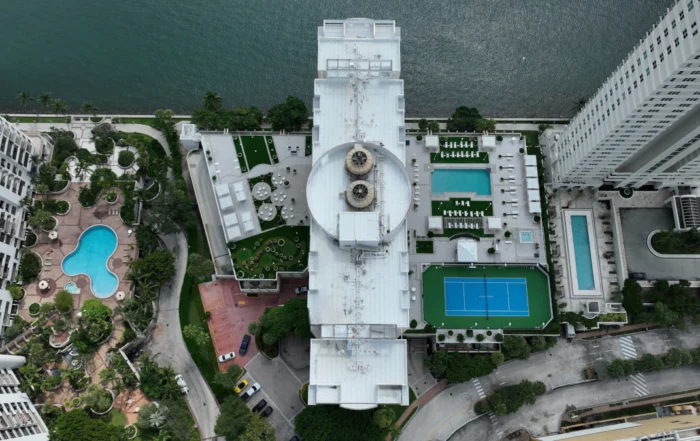
- Majestic Towers Bal Harbour roof restoration
Choosing a Commercial Roofer for an HVHZ Project
The best commercial roofing proposal is not necessarily the shortest or the lowest priced. It should show that the contractor understands the property, can explain the approved assembly and has a plan for permitting, safety, access, drainage, occupied areas and documentation.
Perkins Roofing Corp. is a Florida-licensed roofing contractor serving Miami-Dade and the wider South Florida region. The company works with property owners, managers, condominium associations and commercial decision-makers on inspections, repairs, maintenance, restoration and roof replacement.
To discuss a Miami-Dade commercial roofing project, request a roofing quote or use the online estimate calculator to begin evaluating the property.
Frequently Asked Questions
What does HVHZ compliance mean for a commercial roof in Miami-Dade?
It means the roof must comply with the enhanced Florida Building Code provisions that apply within the High-Velocity Hurricane Zone. The approved roof assembly, attachment method, perimeter details and product documentation must match the building and permitted design.
Does every roofing product need a Miami-Dade NOA?
Products and systems used in the building envelope must have the appropriate approval for their intended use. Depending on the project, this may involve a Miami-Dade NOA or another accepted approval route. The contractor and permitting authority should confirm what applies.
Can an approved product be installed in any configuration?
No. The product must be used within the conditions, deck types, fastening patterns, pressure limitations and other requirements stated in its approval.
Does Perkins Roofing install EPDM roofs?
No. EPDM should not be presented as a roofing system offered by Perkins Roofing. TPO may be considered for selected projects but is not normally the company’s primary commercial flat-roof system.
Does Perkins Roofing perform wind mitigation and four-point inspections?
Perkins Roofing provides roof-condition and consulting inspections. When a formal wind mitigation or four-point insurance inspection is required, the inspection is completed by an appropriately qualified third party arranged or hired for that purpose
About the Author

Tim Kanak
President & Owner, Perkins Roofing Corp.
Tim Kanak is the President and Owner of Perkins Roofing Corp. and leads the company’s continued growth across roofing, construction, consulting, education, and franchising. A licensed Florida roofing contractor, Tim brings hands-on experience in roof replacement, roof repairs, inspections, storm-related roofing issues, advanced roofing systems, and broader building envelope solutions across South Florida.